- Immersed
- Posts
- The Language Wizard Schools Won't Tell You About
The Language Wizard Schools Won't Tell You About
This guy got me more fluent in 4 months than 4th year Korean majors.

Ademola Adeyemi
November 08, 2025
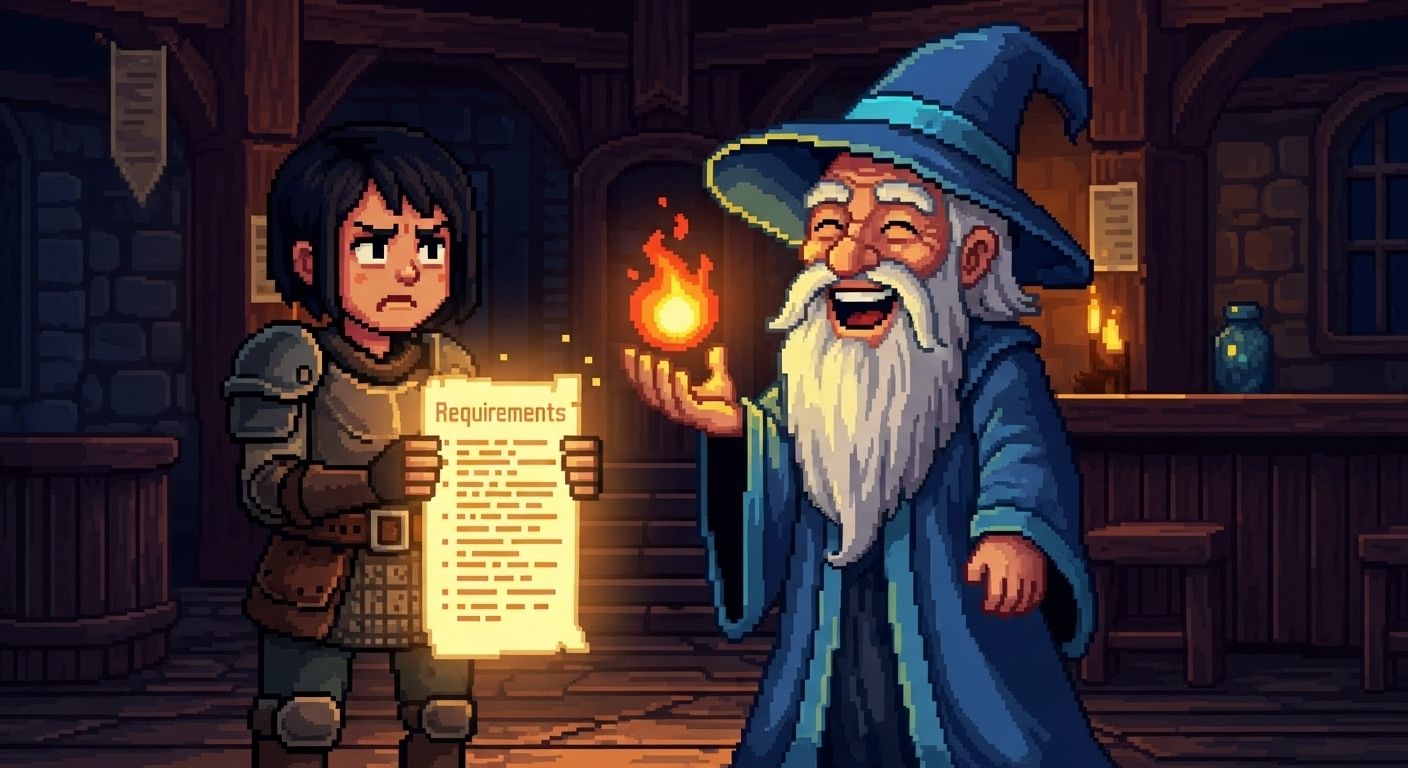

Imagine you're playing a video game. You want to complete a quest. You walk up to the quest-giver NPC and they tell you:
Before you can complete this quest, you need…
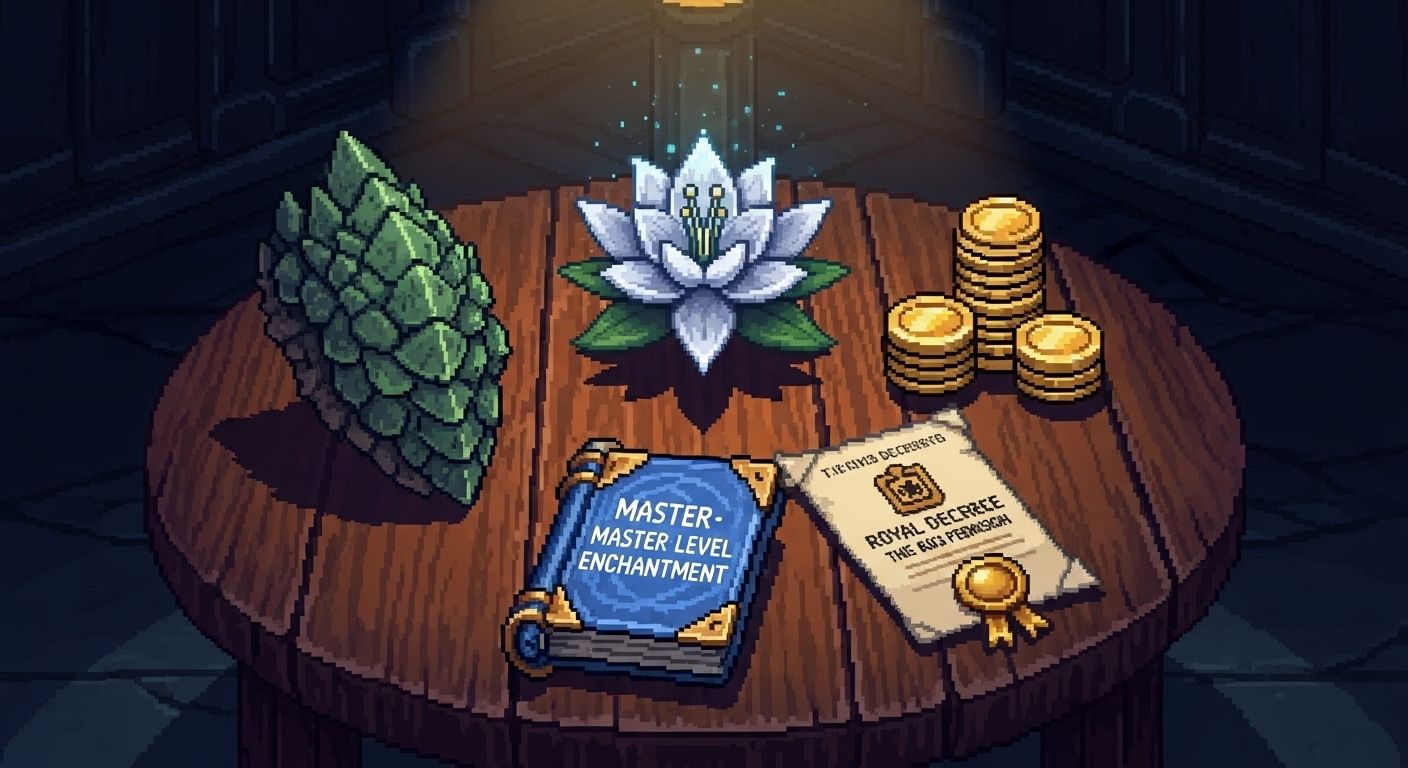
A dragon scale (requires killing the dragon in the volcanic wasteland)
A moon lily (only blooms once per year in the haunted forest)
10,000 gold (requires grinding for 40 hours)
A master-level enchantment skill (requires completing the entire mage guild quest line)
Permission from the king (requires completing 15 side quests to gain reputation)"
You look at this list and think: "Fuck. I guess I'm not doing this quest for another 100 hours of gameplay."

You're about to walk away when an old wizard appears. He looks at your quest list, laughs, and says: "You don't need any of that."
"What? The quest-giver said—"
"The quest-giver is selling you a path designed to keep you playing longer, not to get you to the treasure faster. You need ONE thing: the principle of fire magic. I can teach you that in an afternoon. Everything else is filler."
This is the exact dynamic in language learning between traditional institutional paths and immersion-based methods.
The University Path (The Official Quest-Giver)
You walk into a language learning store (university foreign language department) and say: "I want to learn Korean."
They hand you a list of requirements:
Korean 101 (Fall semester, $2,000)
Korean 102 (Spring semester, $2,000)
Korean 201 (Next fall, $2,000)
Korean 202 (Next spring, $2,000)
Korean 301, 302, 401, 402...
Study abroad semester (requires $15,000 minimum)
Cultural immersion course (additional $1,000)
Literature study (two more semesters)
Total time: 4 years
Total cost: $40,000+
Outcome: Conversational ability, maybe B1/B2 level if you're lucky
You look at this and think: "Okay, I guess fluency requires four years of college study and tens of thousands of dollars. If I don't have that, I guess I can't learn Korean."
The Wise Wizard Appears
But then someone appears who actually completed the quest.
An American guy who taught himself Japanese to native-level fluency without classes, without study abroad, without spending thousands of dollars. He documented the entire process. He can explain exactly why it worked. His name is Matt (he goes by Matt vs Japan online), and he's become something of a legend in the language learning community for one reason: his method actually produces results (and I’m living proof).
“You need TWO principles:
Comprehensible input (i+1: input slightly above your current level)
Interest-driven exposure (content you actually want to consume)
I can teach you how to apply those principles right now. You can start today. From your bedroom. For free.”
The Ideal Immersion to Study Ratio
This seems counterintuitive at first.
Your logical brain asks:
"Why would I watch stuff I don't understand? Shouldn't I learn the basics first, THEN start watching?"
That's how we approach most skills. Step one, then step two, then step three.
But language acquisition doesn't work in steps. It works in layers.
You don't do one thing, then another. You do both simultaneously. You immerse AND you study. They feed each other.
Here's the ratio you need to maintain:
60-80% of your time: Immersion (consuming content, listening, watching, reading)
20-40% of your time: Study (learning vocabulary, reviewing with SRS, understanding patterns)
In the very early stages (first 1-3 months), study will be closer to 40% because you need to build foundation vocabulary quickly. But even then, immersion is still the majority.
This is the yin and yang of language acquisition. The content you struggle to understand today tells you what vocabulary you need to study tomorrow. The vocabulary you study today helps you understand tomorrow's content better.
They're not separate. They're complementary.
If you've been studying for 2 hours and haven't watched or listened to anything, you're out of balance. If you've been immersing for 3 hours but haven't learned any new vocabulary, you're also out of balance.
The quest-giver's path separates them: "First complete grammar study, THEN apply it." By the time you "complete" the grammar study, you've forgotten why you needed it.
The wizard's path integrates them: study what you need based on what you're trying to understand right now. Your immersion drives your study priorities. Your study enables your immersion progress.
Here's what happened in gaming and what happens in language learning:
In early RPG games, developers padded content with artificial requirements because they wanted to extend gameplay time. "Make players grind for 40 hours collecting gold" wasn't because gold-grinding taught important skills. It was because if players finished the game in 10 hours, they'd feel ripped off paying $60.
Language learning institutions do the same thing:
Universities need to justify four-year degree programs (that's how they make money)
Apps like Duolingo need to keep you engaged daily (that's how they retain users for ad revenue)
Textbook companies need to sell multiple levels of books (Spanish 1, 2, 3, 4...)
Programs need to maintain the mythology that language learning is complex and requires expert guidance (so you'll pay for their expertise)
But game developers evolved. They realized: players actually prefer games that respect their time. Cut the filler. Focus on core mechanics. Let players progress based on skill, not time investment.
Language acquisition researchers realized something similar. Krashen's research in the 1980s proved that acquisition happens through comprehensible input, not through grammar drills or explicit instruction. Input time beats study time.
Why You'll Choose The Quest-Giver Anyway
This isn't a hit piece on university language programs.
Universities have their place for some people. Structured environments work for some learners. Social pressure and accountability help some people stay consistent.
But here's what's actually happening when most people choose the quest-giver's path:
They've been conditioned to believe their desired outcome isn't actually possible for them.
You want to be really good at this language. You want to use it in your career. In your relationships. You want to understand movies, songs, conversations without translating in your head. You want to think in the language.
That's the picture in your mind. That's what fluency means to you.
But somewhere along the way, someone convinced you that picture isn't realistic. Or it's only realistic if you spend four years and $40,000. Or it's only possible if you're "good at languages" (whatever that means). Or, if you're lucky, it's achievable if you study abroad for 1 or 2 years (give or take).
So you settle.
You accept this outcome before you even start.
"I just want to be conversational."
"I just want to pass the test."
"I just want to understand the basics."
Not because that's actually what you want. But because you've been told that's what's realistic for someone like you.
The gap between where you are (complete beginner) and where you actually want to be (that picture in your mind of real fluency) feels impossible. So you accept a smaller, more "realistic" goal that the quest-giver promises you.
But The Wizard's Path Has Steps Too
The biggest thing that scares people away from immersion is the idea that there is no concrete path.
You read "thousands of hours of comprehensible input" and think:
"Okay, but what do I do on day one? Day thirty? How do I know if I'm progressing? What are the benchmarks? When do I move from beginner content to intermediate content? How do I even FIND beginner content?"
These are legitimate questions.
And there IS a path in immersion. It's just not measured in semesters. It's measured in capability milestones.
The stages of immersion capability look like this:
Stage 1: Can parse speech (understand where one word ends and another begins)
Timeline: 1-3 months of consistent listening
You'll know you're here when: You can hear individual words even if you don't know what they mean
Stage 2: Can understand simple, repeated content (kids shows, YouTubers who speak clearly)
Timeline: 3-6 months
You'll know you're here when: You catch yourself understanding sentences without translating
Stage 3: Can follow one type of content (dramas, or gaming streams, or vlogs—pick one)
Timeline: 6-12 months
You'll know you're here when: You can watch an episode and understand the plot without subtitles
Stage 4: Can understand most content in your niche (everything related to your interests is mostly comprehensible)
Timeline: 12-18 months
You'll know you're here when: You're watching for enjoyment, not for practice
Stage 5: Can understand content outside your niche (branching into topics you didn't specifically study)
Timeline: 18-24+ months
You'll know you're here when: You realize you just understood a news report about politics even though you never studied political vocabulary
These aren't arbitrary requirements. These are natural milestones that happen when you apply the principles consistently.
The difference: you progress through these stages at YOUR pace, not at the institution's pace.
The Wizard Gives You Three Spells (Principles)
Comprehensible Input (Krashen's i+1): Consume content slightly above your current level. Your brain acquires language subconsciously when you understand messages.
Interest-Driven Exposure: You can't sustain thousands of hours unless you genuinely care about the content. Find what you actually want to watch/read.
Trust + Time: Acquisition is subconscious. Trust the process. Give it time. Don't test yourself constantly. Let your brain do its work.
That's it. Those are the three principles. Everything else is implementation details you customize based on your circumstances.
You Can Complete The Quest Today
The quest-giver says: "Come back in four years with $40,000 and we'll give you conversational ability."
The wizard says: "Start today. Your bedroom. Your computer. Netflix has Korean dramas. YouTube has comprehensible input channels. Anki is free. The principles work if you apply them consistently."

One path requires permission, money, and time.
The other requires principles, consistency, and courage to walk away from the official quest-giver.
The question isn't which path is easier. The question is: which path actually gets you to the treasure?
Most choose the curriculum schedule. They'll pay for the elaborate requirements. They'll complete all the semesters. They'll check all the boxes.
And four years later, they realize they still can't understand the natural native conversations they avoided years ago.
Requirements are often artificial. Principles are always real.
The wise wizard isn't selling you an easier path. He's showing you that the official path was designed to keep you paying, not to get you fluent.
The quest was always completable. You just needed someone to show you that all those requirements were optional.
You have the principles. You have the path. You have permission to start.
The only question left is: are you walking past the wizard to pay the quest-giver, or are you ready to complete this quest on your own terms?