- Immersed
- Posts
- I quit learning korean
I quit learning korean
Reading minus understanding f*cking sucks. Advice I wish I had 10 years ago.

Ademola Adeyemi
November 02, 2025

This is my story.
I started Korean in January 2020 with one simple goal.
6 months until graduation.
Get fluent enough to surprise Mrs. Jeon with a thank you speech in Korean.
I thought 6 months to fluency was reasonable.
COVID canceled graduation.
Never got to give her that letter.
But
— Ademola 주목혁 (@adeimmersed)
1:56 PM • Oct 14, 2025
January 2020. Mrs. Jeon inspired me to learn Korean. Six months to fluency seemed reasonable. COVID canceled graduation before I got the chance.
But I kept going.
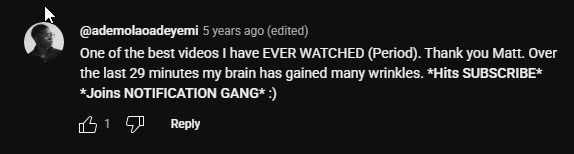
June 2nd, 2020. This video changed everything. Twenty-nine minutes that completely reprogrammed my understanding of language learning. This is when I discovered immersion.
July 1st, 2020. Started immersing. Never looked back.
I fell in love with the process. Two years later, I was taking my major courses entirely in Korean at a SKY university. Friends. Basketball. A life I never imagined.
January 2020 to July 2020 to Yonsei in 2022. That's the timeline.
Except it's not the full timeline.
Because there's a piece of my Korean journey I almost never mention. An earlier chapter. A YouTube video I watched years before Mrs. Jeon. Years before Matt vs Japan. Years before I knew what immersion was.
2016. Eighth grade. This YouTube video. Forty minutes.
That's how long it took me to learn to read Korean.
Two weeks later, I quit. Completely.
I expelled language learning out of my mind indefinitely.
Looking back almost 10 years later, I finally understand what went wrong and what I wish someone had told me before I gave up.
This is that story. The moment that almost ended everything. And the advice that would have saved eighth-grade me from years of thinking I wasn't cut out for language learning.
Heads up:
This one’s a hefty baby. I'm breaking down everything—the YouTube video, the pride, the crash, the years in between, all of it.
Short on time? You can bookmark this and read it online later clicking the link at the top right of this letter.
TLDR? Scroll straight to "What I'd Tell Eighth-Grade Me" near the end. That's a letter to my past self—to Ademola, the eighth grader who learned to read Korean but gave up immediately after. It's a rough summary of everything I dive into throughout this piece.
Either way, let's get into it.
The YouTube Video That Changed Everything
I'm going to link the video at the end, but first let me paint the picture.
Eighth grade me was already in this mindset of wanting to level up. I was thinking about high school, about the future, about what skills would make me stand out. I saw this video in my recommended feed and the concept felt absurd.
Learn to read Korean in 5 minutes?
At that point in my life, the idea of reading any Asian script felt like something that took years. Chinese characters? Intimidating. Japanese kanji? Insurmountable. Korean Hangul? Same category—ancient, complex, requiring immense study to even begin understanding.
But the video was only 5 minutes long. The cost of being wrong was low. The potential payoff was massive.
So I watched.
And the video delivered. Using mnemonics and systematic explanation, it broke down how Hangul works as an alphabet—not like Chinese characters where each symbol is a word, but like English where symbols combine to make sounds.
After 5 minutes, I had the concepts. After 40 minutes of practice, I could actually read.
And here's the cool part: the video included practice with actual Korean words. Words like "바나나" (banana), "카메라" (camera)—Konglish. English words written in Korean script.
I could read these and immediately understand what they meant because they were just English sounds in a different script.
And that felt incredible.
The High Pride Phase (When I Became "The Guy Who Can Read Korean")
Here's something I need you to understand about this moment: learning to read an Asian script in less than an hour felt like I'd accomplished something most people never do.
Because it's true. Most people don't learn to read Korean. Most people don't learn to read Chinese characters or Japanese hiragana and katakana. These scripts feel foreign, intimidating, impossible.
And I'd just done it. In 40 minutes.
But the Konglish words made it even better. Because I could read Korean words that my friends couldn't read even though they were basically English.
I'd show them: "바나나"
They'd stare at it like hieroglyphics.
I'd say: "It's banana."
Their minds would explode.
My pride was high af. And I expressed it—to everyone, constantly, without anyone asking.
"Hey, you want to see something cool? I can read Korean."
At school. To my parents. To my brothers. To anyone who would listen.
And most people reacted exactly how I wanted them to: "Wait, you can WHAT?"
Then I'd pull up some Korean text and read it aloud, and they'd be amazed. "That's insane. How did you learn that so fast?"
My identity became: Ademola is the guy who can read Korean.
And I loved that identity. I wore it proudly.
So I kept reading. I wanted to get better at it, smoother, more confident. I'd scroll through Korean Wikipedia articles just to practice. I'd look up Korean words to test myself.
I was riding this high of accomplishment, this feeling of being special, of having a skill that made me different.
When I'd read Korean sentences and catch a Konglish word—"레스토랑" (restaurant), "컴퓨터" (computer)—my brain would light up. Holy shit, I got that one. And I'd completely ignore everything else in the sentence I didn't understand.
Because in my head, I was focused on reading. I'm reading. I'm getting better at reading. I'm the guy who can read Korean.
And then someone asked me a question that changed everything.
The Question That Shattered My Identity
I don't remember who it was. I don't remember the exact context. But somewhere along the line, while I was reading Korean text to someone, they asked:
"Do you understand what you're reading?"
And I froze.
Because I hadn't thought about that. At all.
I mean, technically I understood a couple of words. The Konglish ones. The ones that were basically English in Korean script.
But everything else? The grammar? How words connected to each other? What a full sentence actually meant?
Nothing.
A couple of words next to each other felt overwhelming. A full sentence was incomprehensible. I had no idea how the pieces fit together. I'd never looked at grammar. I didn't know where to look for grammar. I had no experience learning how sentences worked.
My identity shifted in that moment:
From: Ademola is the guy who can read Korean
To: Ademola is the guy who can read Korean but doesn't understand anything he's reading
And that addition to my identity was where things started to go down hill.
The Snowball Effect (How Awareness Killed My Motivation)
The more I thought about that question: "Do you understand what you're reading?" the bigger the problem grew in my mind.
I started thinking about all the Korean words I'd been reading. There were so many. Hundreds. Thousands, probably.
How would I learn all these words?
And then: Oh shit, but then there's grammar. How does grammar work? How do they make sentences? What's the difference between phrases and words?
And then: How would I even know if what I'm reading is correct? How would I know if I'm pronouncing things right if I don't understand what they mean?
My brain started snowballing. Every question led to three more questions. Look at this, then look at that, oh my gosh I don't know that, and I also don't know that, and I also don't know that.
Once you do that enough times, you find yourself feeling like you don't have many options.
And my primary option became: Let me stop wasting my time.
Here's the thought that ended everything:
If I keep reading shit I can't understand, there's literally no point.
The "Quit" That Wasn't Really a Quit
But here's the thing: I didn't really quit Korean.
I kinda never started.
I never opened a grammar book. Never took a class. Never took the first step beyond reading.
If you don't begin, you can't quit, right?
I just... backed away. Compartmentalized it. Almost forgot I'd even learned to read.
By the time I realized how overwhelming everything felt, I'd already decided not to take that first step. So in my head, I didn't quit Korean. I just never really engaged with it beyond that 40-minute reading lesson.
It became this weird artifact in my mind. A past life. Something I'd done once but didn't think about anymore.
And honestly? That made it easier to avoid. Because if you never started, you never failed.
Ninth Grade: The Seed That Didn't Sprout (Yet)
Then ninth grade happened.
Mrs. Jeon.
She was the teacher everyone told you to avoid. Algebra 2. Thick Korean accent. Students literally switched out of her sections if they could because "you won't understand a word she says."
But I ended up in her class anyway. Schedule conflicts, no other options.
And within the first week, something clicked.
While other students rolled their eyes and blamed their confusion on her accent, I found myself actually listening. Not just to her math explanations, but to everything else she'd say between problems.
She'd pause mid-equation to reference Korea. She mentioned how even her own son struggled with Korean because the language was so difficult.
She'd laugh off the ignorant North Korea jokes with this patience that said she'd heard it all before, a thousand times, and still chose grace.
There was something about her that struck me. Here was this woman who'd left everything familiar, learned English, became a teacher, and dealt with teenagers blaming their failures on her accent every single day. And she never quit. She'd stay after class to help struggling students, speaking slower, drawing extra diagrams, refusing to let anyone fail.
I got 98% in her class that semester.
Not because I was naturally good at math. Because I actually listened while others chose not to.
And in those quiet after-class moments, she'd tell me about Seoul, about her family, about Korean traditions that sounded fascinating to me.
She was planting seeds.
Maybe I should learn Korean.
But even with that seed planted, even with that thought sitting in the back of my mind, I still didn't start.
Because I still had the same mental model from eighth grade: learning a language requires years of formal study or living abroad.
It requires access I didn't have. Money I didn't have. Time I didn't have.
Under those assumptions, building understanding felt impossible.
So the seed sat there. Dormant. For years.
The Years Between: Learning How to Learn
What changed between ninth grade and 2020 wasn't one moment.
It was an accumulation.
I started watching language learning YouTubers. Xiaomanyc. Ikenna. Lindie Botes.
And slowly—over months, over years—I started learning how to learn.
I started seeing:
Oh, you don't need to live abroad to get good.
Oh, there are free resources like Talk To Me In Korean and Pimsleur.
Oh, people are doing this without formal classes.
Maybe 6 months to fluent isn't insane.
My mental model was slowly being dismantled. Brick by brick.
Every video I watched, every method I discovered, every success story I encountered it all chipped away at my belief that fluency required conditions I didn't have.
But there was one video that hit different.
The Xiaoma Gut-Punch
Then I saw it.
Xiaomanyc's "I Learn Korean in 24 Hours | Shocked Korean Locals."
24 hours.
Not 7 days. Not a week. Not even a full day and night.
24 f*cking hours.
I remember watching that video and feeling my stomach churn.
Not inspiration. Not excitement.
Inadequacy.
A gaping pit in my gut.
Because Korean felt like my language. The language connected to Mrs. Jeon. The language I'd been thinking about for years but was too scared to attempt.
And here was Xiaomanyc, learning it in 24 hours and getting complimented by Korean locals.
The clickbait was insane. Obviously he wasn't fluent. But that wasn't the point.
The point was he could say things. He could understand some things. He was having conversations.
Imperfect? yes. Broken? no doubt. But real language usage ability—after 20 + 4 bloody hours.
And I'd been too scared to even try for years.
How the hell did he do that in 24 hours when I've been avoiding this for years?
That feeling, that wrench stuck in my gut—was weirdly motivating.
If he can do that in 24 hours, what's my excuse?
And here's what broke my brain: if he could get to that level in 24 hours, imagine what I could do in 6 months.
That video completely shattered my perception of what was impossible. It wasn't about matching his 24-hour challenge. It was about realizing that maybe—just maybe—6 months was actually realistic.
I wanted to be better than the level Xiaomanyc displayed in that video. Way better. But to get there, I needed to take action. Daily action. Not sit around thinking about it for another year.
What Made 2020 Different
So when January 2020 came around and I set that goal—surprise Mrs. Jeon with a thank you speech in Korean—I had something eighth-grade me didn't have:
A realistic timeframe. Six months, not 10 years.
A concrete goal. Specific person, specific message, specific deadline.
Years of accumulated knowledge about how people actually learn languages.
I knew about immersion (at least vaguely). I knew about free resources. I knew I didn't need to live in Korea or take formal classes. I knew competence wasn't about years studied—it was about what you did in those years.
And here's the kicker: I still had my reading ability from eighth grade.
I could still decode Hangul. The skill was still there, dormant, waiting to be used.
But this time, I knew what to do with it.
Your Identity Shift Is Actually Awareness (But Awareness Alone Isn't Enough)
Going from "I'm the guy who can read Korean" to "I'm the guy who can read Korean but doesn't understand what he's reading" felt terrible.
But that identity shift was actually valuable. It meant I was aware of what I had and what I still needed to build.
The problem wasn't the awareness. The problem was interpreting that awareness as "therefore reading is pointless."
Instead, I should have interpreted it as "therefore understanding is what I need to build next."
Same awareness. Different interpretation. Completely different outcome.
But here's the thing eighth-grade me didn't have: a roadmap for building understanding.
And that's the piece that makes or breaks everything.
The Overwhelming Fear of Understanding
Understanding is by far the most overwhelming concept every language learner faces.
Because nobody tells you how to build understanding. They just tell you that you need it.
I'd never taken a language class before. I actively avoided them in middle school because I heard they led to bad grades and people who couldn't actually speak the language. So my relationship with language learning was non-existent.
When I thought about "building understanding," I was working with fundamentally flawed mental models:
People who understand languages have to live in the country
You have to go to school and study intensively for several years
The best language learners are people who studied the language for the most amount of years
Competence = years studied
These were the only frameworks I had. And under those frameworks, building understanding felt impossible.
I couldn't move to Korea. I wasn't going to study Korean in school for years. So how the hell was I supposed to build understanding?
I didn't know you could create your own immersion environment. I didn't know comprehension could come from watching content with subtitles. I didn't know exposure was more valuable than years of study.
All I knew was: understanding requires something I don't have access to.
So I “quit.”
The Big Picture Paralysis Problem
Here's what killed my eighth-grade Korean journey:
I looked at the big picture and told myself it was too much work.
There are thousands of words to learn. There's grammar to understand. There are sentence structures to internalize. How am I supposed to do all of that?
This is what I call outcome-focused thinking, and it's the single biggest motivation killer in language learning.
Let me explain with an example:
Someone tells you that you need 10,000 words to be fluent.
You learn 10 words in one day. It takes you about an hour.
Then you calculate: 10 words is 0.1% of 10,000. If it took me an hour to get 0.1% of the way there, it's going to take me 1,000 hours to reach my goal. That's 41 days if I study 24 hours a day. That's over 3 years if I study 1 hour per day.
And suddenly, what felt like a productive hour—learning 10 words—feels like a drop in an endless ocean.
You've just killed your own motivation by viewing today's actions through the lens of "how far am I from the end goal?"
This is exactly what I did in eighth grade. I looked at all the Korean I couldn't understand, calculated how long it would take to understand it all, and concluded it wasn't worth the effort.
I shot myself in the foot with my own perception of the gap.
This outcome-focused thinking came from how I grew up in the school system. I was always focused on grades, test scores, final results. I was always concerned about what the outcomes of my actions were, more so than the actions themselves.
I thought thinking about the big picture was the only way to accomplish my goals.
And for some things—like getting good grades in school—that mindset worked. You need to know what the test covers so you can study the right material.
But for something like language learning? Outcome-dependence completely cut me off from ever making an attempt.
Because language learning doesn't have a final test. It doesn't have a clear endpoint. It doesn't have a grade that tells you you're done.
So when I looked at the big picture—all the words I didn't know, all the grammar I didn't understand, all the comprehension I didn't have—I told myself: "That's too much work. I'll never get there."
And I gave up before I even started.
The Daily Action Focus That Changes Everything
Here's what eighth-grade me needed to know:
The fastest way to reach fluency is to stop thinking about reaching fluency.
Instead, focus on what you can do today.
Not: "I learned 10 words today, which only puts me at 0.1% toward my goal of 10,000 words."
But: "I learned 10 words today. I successfully accomplished my goal for today."
The difference is subtle but massive.
When you hit your daily action goal, you build positive momentum. You're making progress. You're moving in the right direction. You're winning.
When you view your daily actions through the lens of the big picture, you're constantly reminded of how far you still have to go. You're losing. You're barely making a dent. You're wasting time.
Same actions. Completely different psychological impact.
So how do you actually build understanding without getting overwhelmed?
You engage with content you actually care about. And you read with the intention to understand minus the pressure that comes with failing to understand.
Here's what that looks like:
Instead of looking at entire pages forcing yourself to comprehend everything perfectly, you watch content you're interested in. Read along with the subtitles. Try to understand. Notice where you get lost.
Instead of trying to understand an entire drama episode on first watch, you focus on engaging with what grabs your attention. The scenes you're curious about. The phrases that repeat. The moments you want to understand.
Instead of setting a goal of "understand Korean," you focus on building understanding through exposure. Watch content. Read along. Notice what you don't understand. That's how you find the gaps.
Then (and this is key), you use your study time to address those gaps.
Saw a grammar structure that tripped you up? Look it up. Watch a YouTube video about it. Check your textbook. Encountered a word that kept showing up? Add it to your flashcards.
Your immersion time reveals the gaps. Your study time fills them.
The principle: you can't build understanding when you have nothing to build with. So you expose yourself to the language, notice what you're missing, then acquire what you need.
When you do that daily, engage with content you care about and use your confusion as a roadmap, understanding builds naturally.
What I'd Tell Eighth-Grade Me (The Advice That Would Have Changed Everything)
If I could go back and talk to eighth-grade me, sitting there with his newfound reading ability, feeling proud and then suddenly feeling inadequate. Here's what I'd say:
"Hey. I know you're feeling overwhelmed right now.
You learned to read Korean in 40 minutes, and instead of celebrating, you're spiraling. Thinking about all the words you don't know. All the grammar you'll never understand. All the years it's going to take.
I need you to hear this: you're not broken. You're not incapable. You're just looking at this wrong.
Reading and understanding are different skills. Sequential, not simultaneous.
You have step one. That's incredible. Most people never even get that far.
Step two—understanding—comes from exposure. From watching content you care about. From reading along with subtitles. From looking up words you're curious about.
Not from living in Korea. Not from years of formal classes. Not from money you don't have or conditions you can't create.
From daily action. 10 minutes. That's it.
The gap between reading and understanding? That's not proof you're failing. That's knowing what to build next.
And here's what you need to understand about building: you don't need to see the whole staircase. You just need to take the first step.
Watch Korean content for 10 minutes today. Read along. Notice what grabs you. Look up one word. That's your win.
Do that tomorrow. And the day after. And the day after that.
In four years, that's 243 hours. Way further than quitting gets you.
But here's what's actually going to happen:
You're not going to wait four years. In less than 4 months of consistent daily immersion, you're going to surpass people who studied Korean formally for 4 years.
Korean is going to stop feeling foreign. It's going to become just another language you understand, teach in, live in. Over 40 books. Over 15,000 hours. Not because you're studying—because you're living.
You know that feeling of inadequacy you're carrying? That feeling that you'll never be good enough?
A few years from now, you're going to watch a video of someone learning Korean in 24 hours and getting complimented. And it's going to hurt. It's going to make you feel like you're not capable.
But here's the truth: in less than 6 months of daily immersion, you'll be way better than that. You'll realize that video wasn't even that impressive—you just weren't skilled enough yet to see the gaps.
But you get skilled enough. And you keep going.
You have everything it takes. You are more than capable.
About next year:
You're going to meet someone who changes your life. A teacher. She's going to show you what resilience looks like. What it means to persist when everyone tells you to quit. What grace under pressure actually is.
Listen to her. Pay attention to her stories. Notice how she chooses patience over bitterness, hard work over excuses.
She's planting something in you that you can't see yet. Something about culture, about perseverance, about honoring people by learning what matters to them.
Those seeds are going to matter. When the world shifts in ways you don't expect, when you find yourself with time and space you didn't predict, those seeds are going to be what makes you finally start.
So here's what I need you to do:
Don't quit. Don't avoid starting because the big picture feels impossible.
Start with today. What can I do today?
That's the only question that matters.
You're going to study abroad. Live in Korea. Make friends who become family. Build memories that shape who you are.
Not because you're special. Not because you had perfect conditions.
Because you asked "what can I do today?" and you showed up.
Every. Single. Day.
That's the question that changes everything."
The Closing
If you've ever learned a script but felt like it was useless without comprehension, you're not failing. You're at step one.
If you've ever dismissed your own progress because it "wasn't enough", you're not behind. You're building sequentially.
If you've ever looked at the big picture and told yourself "that's too much work", you're not incapable. You're using the wrong frame of reference.
Here's your new frame:
Awareness: "I can read but I can't understand."
Outcome-focused interpretation (wrong): "Understanding requires too much work. I'll never get there. This is pointless."
Action-focused interpretation (right): "I can read, which is step one. Now I need to build understanding. What can I do today to move in that direction?"
One interpretation kills your journey before it starts.
The other interpretation gives you a roadmap forward.
Reading is your access point. Use it.
Comprehension builds through exposure. Give yourself that exposure.
The gap between skills is your roadmap. Follow it.
Focus on what you can do today, not how far you are from done.
Because the fastest way to reach fluency is to stop thinking about reaching fluency and start thinking about what actions you can take today that move you in the right direction.
Do that every single day, and at some point, the content you're reading will connect to meaning. The sounds will make sense. The language will click.
That's the dream most learners want—and your reading ability is exactly what will get you there.
But only if you use it instead of dismissing it.
Start from where you are. Use what you have. Trust the process your brain was designed for.
Eighth-grade me gave up because he didn't have this roadmap.
You do.
Start with one reason. Stay for the life it builds that you never imagined.
– Ade
P.S. If you're stuck in the gap between reading and understanding, here's your action step for today:
Find one piece of content in your target language with subtitles in that language.
Watch for 10 minutes. Read along.
Try to understand.
Notice where you get lost. That's how you find your gaps.
Then use your study time to address what you found.
That's it. That's your win for today.